Welcome to PaddlingCalifornia.com!
your gateway to paddling adventures in California!
Flat Water Kayaking For the First TIme

PaddlingCalifornia.comA complete guide to kayaking and canoeing California's flat waters
Welcome to PaddlingCalifornia.com!
your gateway to paddling adventures in California!
Flat Water Kayaking For the First TIme

|
|
Kayaking is the ultimate outdoor activity to take part in with friends and family. It can be enjoyed by individuals of all ages and is quickly gaining popularity throughout the state of California.
Kayaking can be a rewarding experience if you follow some basic guidelines. First, you need to determine what type of kayaking you are interested in; weekend getaways, extended excursions, day jaunts, kayak fishing, long distance touring, boat-in camping, etc., or if you want to partake in several different types of kayaking.
KAYAK
Purchasing a kayak will be your biggest expenditure if you decide to own instead of rent. The different kayak model designs are specific to what the kayak will be used for. Wide kayaks are more suitable for novice kayakers, anglers and photographers because they provide more stability. The wider the kayak, the more stable, but the slower and harder it is to paddle. The narrower the kayak, the less stable it is, but the more speed it has. Narrower width and longer length kayaks are a good choice if you want to paddle long distances. Shorter kayaks are easier to turn and maneuver and are less cumbersome to transport than longer kayaks.
SOT (sit-on-top) kayaks are usually wider and provide more stability than narrower and longer sea kayaks. SOT kayaks aren’t designed to paddle a white water river, but they work well on slow moving or flat water. SOT kayaks offer a variety of uses for boat-in camping, kayak fishing, kayak photography, day jaunts as well as longer distances, but you will extend more energy paddling and travel at a slower pace than you would paddling a sea kayak if you expended the equal amount of energy.
Sit-on-tops (SOT) have a molded depression on top of the kayak, above water-level, to sit on. It's easy to get on and off a SOT and more difficult to capsize than a sit-in model, but if you do tip over, it's easier to get back on board. Sit-on-tops are popular in hot climates. You can dive into the water and cool off, whereas with a sit-in kayak you cannot.
|
|
SOT’s and sea kayaks can hold one or two passengers, (tandem models). SOT’s are more affordable and easier to use than most sea kayaks, but they do not track as well as sit-in sea kayak models. A few SOT kayaks have rudders to help steer in open water.
You sit inside of a sea kayak from the waist down. A spray skirt is worn by the paddler which is pulled over a lip around the cockpit of the kayak to create a watertight seal. This prevents the cockpit from filling up with water and at the same time keeps the paddler dry.
Sea kayaks are designed to travel long distances. Most sea kayakers paddle in the ocean but many also paddle on lakes and rivers. Some sea kayak models have bulkheads with sealed hatch covers which offer dry storage, and many have a rudder which allows you to turn with greater ease. The combination of a skeg and a longer waterline improves straight-line tracking and makes it easier to control the kayak while paddling.
|
|
Inflatable kayaks are popular for people who don't have space to store their kayak, or who cannot lift the kayak on top of their car. Inflatable kayaks can be deflated and inflated quickly, usually with the help of a foot or an electric pump. They have one problem though, they can pop if over inflated or punctured.
When purchasing a kayak, the material and construction of the kayak are important considerations, as they will play a role in price, durability, and weight. There are three main types of materials used in making SOT and sit-in kayaks: plastic, fiberglass, and Kevlar. The two most common inflatable kayak materials are PVC and Hypalon. There is also a newer material being used for inflatables called Nitrylon. All three inflatable materials are durable, though some more than others.
INFLATABLE KAYAK MATERIALS
PVC coated inflatable kayaks are long lasting with proper care. PVC is less expensive than Hypalon coated inflatable kayaks and easier to patch. The downside to PVC coated kayaks is they are not as resistant to chemicals, gasoline, temperatures, abrasions and sunlight as Hypalon-coated fabrics – though some PVC fabrics are strengthened to be more cold resistant.
Hypalon coated inflatable kayaks will last the longest of any other inflatable kayak material. It has better UV resistance and is very resistant to environmental factors like mildew and fungus. Hypalon is more expensive than PVC.
Nitrylon coated inflatable kayaks are very puncture resistant, easier to patch than PVC and Hypalon coated inflatables, and performs better in cold weather, but Nitrylon is very heavy. It is usually only used on the outer chambers of the boat where there will be the most wear and tear
|
|
RIGID KAYAK MATERIALS
Plastic kayaks are tough and can endure all kinds of impact, but they are heavy to hoist onto the top of your vehicle by yourself.
Fiberglass kayaks are lighter weight than those made of plastic, however, they usually are more expensive. Fiberglass kayaks are very strong, but a paddler needs to avoid hitting rocks or hidden underwater objects like tree stumps and rocks.
Kevlar kayaks are very strong and are the lightest material available, but they are usually the most expensive.
If you are just starting out, you might want to go with an affordable plastic kayak, but before purchasing a kayak, check out a kayak demo expo or rent a number of different kayak models from a local kayak retailer. Also try several kayak paddle designs to see which one feels the most comfortable to you. A good-fitting cockpit is one where you sit comfortably, but have firm contact everywhere your body touches the boat: feet, knees, thighs, butt and lower back. Bracing your feet on foot pegs that are attached to the inside hull helps keep you centered, trim and level. Adjustable foot pegs give more options for positioning, and they are good for multiple users.
KAYAK LESSONS
|
|
Before you purchase a kayak, take some lessons to know what to do if you capsize, as well as learning the basic paddling strokes, bracing and turning techniques. Kayaking lessons are taught through kayak clubs and kayak retailers,
or you can hire a professional kayak instructor. The price of kayaking lessons varies. Some kayak retailers who offer kayak rentals and lessons will apply the full cost of the lessons and rental towards the purchase of a kayak and/or equipment.If you decide on a “sit-in” kayak, it is advisable to take wet exit lessons, whereas the sit-on-top paddlers will not need to learn how to roll or wet exit, which makes them a more appealing choice for many kayak enthusiasts. As a sit-on-top kayaker you will, however, want to learn how to get back onto a sit-on-top kayak in deep water. Practice the deep water reentry technique from water close to shore. Do not paddle off shore further than you can comfortable swim, until you have mastered getting back on top of your kayak from deep water consistently.
All sit-on-top and sit-in paddlers need to learn:
l Different paddling strokes, and kayak maneuvering and steering techniques
l How to select a kayak for your kayaking preferences.
l How to load and secure your kayak.
l How to launch and land.
l How to roll, wet exit, capsize and reentry techniques.
l How to paddle in adverse weather conditions, (and when to get off the water).
l What safety equipment and clothing you need.
l Basic safety.
CLOTHING & EQUIPMENT
The clothing and equipment essential for kayaking can vary according to the type of kayaking you do. Some equipment you can’t do without, like a paddle and a life vest. While some items may not be necessary for every trip, they can play a large part in keeping you safe and comfortable.
EQUIPMENT
l Compass l Cell Phone and/or Marine Radio l Maps and tidal charts
l Food and water l Dry bag with extra set of clothes l Paddle leash l Plugs for the self bailing holes l Paddle float - Spray skirt (if applicable) l Bilge pump and sponge - Flares/signaling device l Safety whistle l Tow line l First aid kit l Sunscreen & Chap stickCLOTHING
l Hat l Sunglasses l Wind jacket & pants l Dry suit (colder weather & water) l Booties & Gloves (cold weather & water)
PADDLE
Paddles are defined by four primary characteristics - blade shape, shaft shape, length and material.
Blade shape: Most novice paddlers begin with flat paddles because they are easy to use. However, they don't move as much water as other paddle blades and can put a lot of strain on your shoulder and back muscles. A wide blade with a larger surface face can provide greater acceleration, but will also create more resistance and drag in the water. It takes more effort to use a large-bladed paddle than a smaller one. A long, narrow blade will take more strokes to move through the same amount of water, but the paddler will be less tired.
Paddles also come in a feathered shape, where the paddle heads are one quarter turn off from each other. While one head is in the water, the other cuts through the wind, instead of dragging against it. These paddles require a little more time to learn, and require the kayaker to rotate the paddle during every stroke, which can put strain on your wrists, if not done properly. Curved and winged blades are available, but are not recommended for novice paddlers. They are very efficient when used properly, but are unnecessary for novice paddlers.
Paddle shafts are either straight or bent. Straight shafts are far more common and inexpensive, but they can strain your wrists. Bent shafts allow for the wrists to remain at a more comfortable angle.
Long shafts make distance paddling easier and maneuverability harder.
Short shafts are usually used for whitewater kayaking, where the river does most of the work and the kayaker needs to focus on steering. Some shafts come apart in the middle and twist together.
There are several materials used for paddles, such as fiberglass, plastic, aluminum, graphite, Kevlar, carbon, or wood. Each paddler will have to consider the combination of weight, durability, flexibility and cost. Wooden paddles are heavy. Carbon fiber paddles are pricey, plastic paddles break. The materials used to construct the paddle will determine its weight, durability and flexibility.
LIFE VESTS
A personal flotation device, (PFD), lifejacket or life vest, helps you stay afloat when you capsize. Always wear a PFD when you are out on the water, especially if you are new to the sport. There are all kinds of lifejackets on the market in all different styles and materials. The only way to pick one is to go try them on.
Look for PFD vests with large neck and arm holes that allow you more room to move while paddling, but if they are too loose or too tight, they will rub. A PFD should be snug and fit like a glove, yet allow you to move freely and not chafe while paddling. To get the best feel and fit, wear your paddling clothes when trying on a PFD. The more straps a PFD has, the more adjustments can be made to customize its fit.
TRANSPORTING YOU KAYAK – ROOF RACKS
If you plan to take your kayak on a car top regularly, you'll find a roof rack system worth the investment. If you want to minimize your cost, consider buying a used kayak rack online, or you can purchase car-top foam blocks, and use tie down straps. Your kayak rack should hold your kayak securely with tie-down straps. Some racks include tie-downs that will secure the front or back tip of the kayak to your vehicle’s bumper for extra security to avoid the kayak jarring loose due to vibration.
WHERE TO GO
Learning how to prepare properly for your kayak trip is one way to ensure that you have the best time possible while also remaining safe. Some trips might include overnight stays at campsites, which requires more planning. When planning longer trips, be sure to have the resources to keep your items dry, and bring enough items without bringing too much. The best way to improve your safety and enjoyment on a kayak outing is to stress personal responsibility, preparation and sound decision making. The more prepared you are, the more likely you will have a safe and enjoyable trip.
Plan your first kayaking experiences to be in a location where there is calm water, such as a lake, harbor or bay. PaddlingCalifornia.com will help you find lakes and rivers in your local area. For more information on planning a kayak outing, read July’s Featured Article at paddlingcalifornia.com: Planning a Kayak Excursion
In the end, your personal preference as to which kayak, paddle, and PFD feels the best may be the deciding factor in your decision on which one you select.
____________________________________________________________
|
|
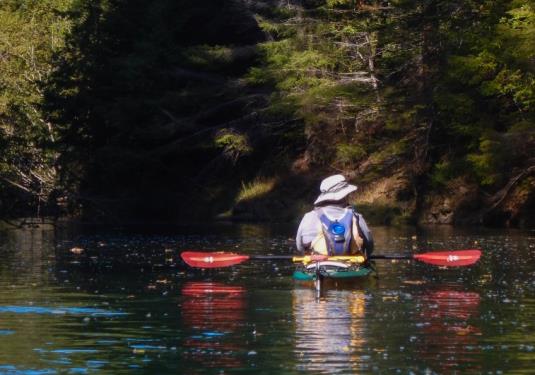
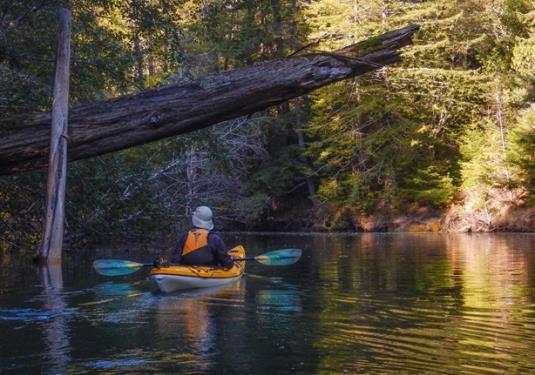
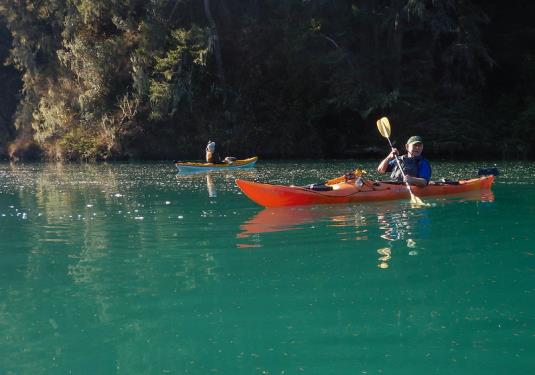
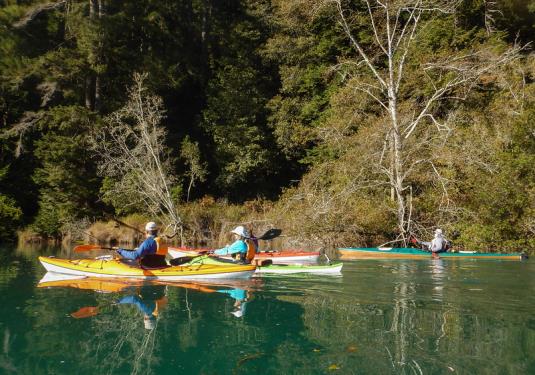
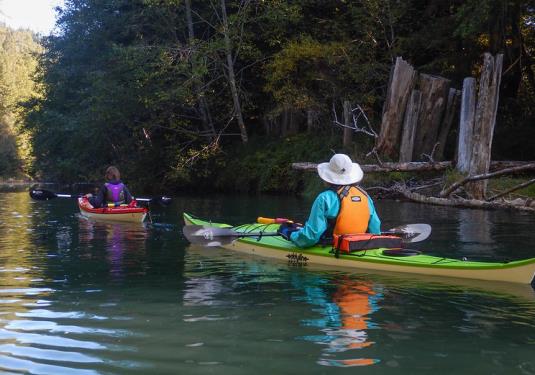
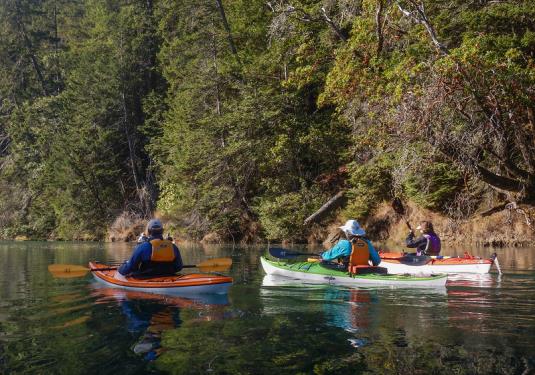
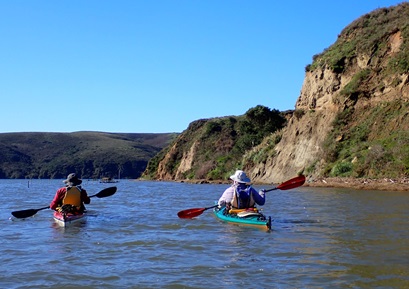
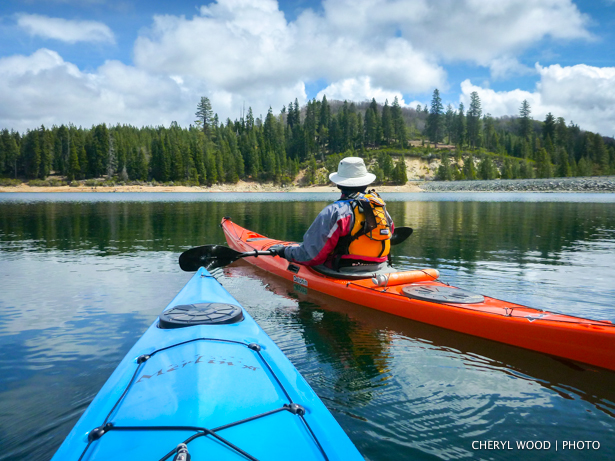
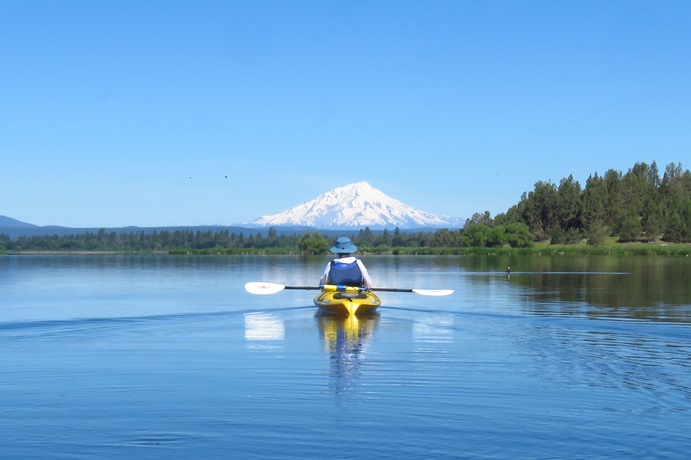
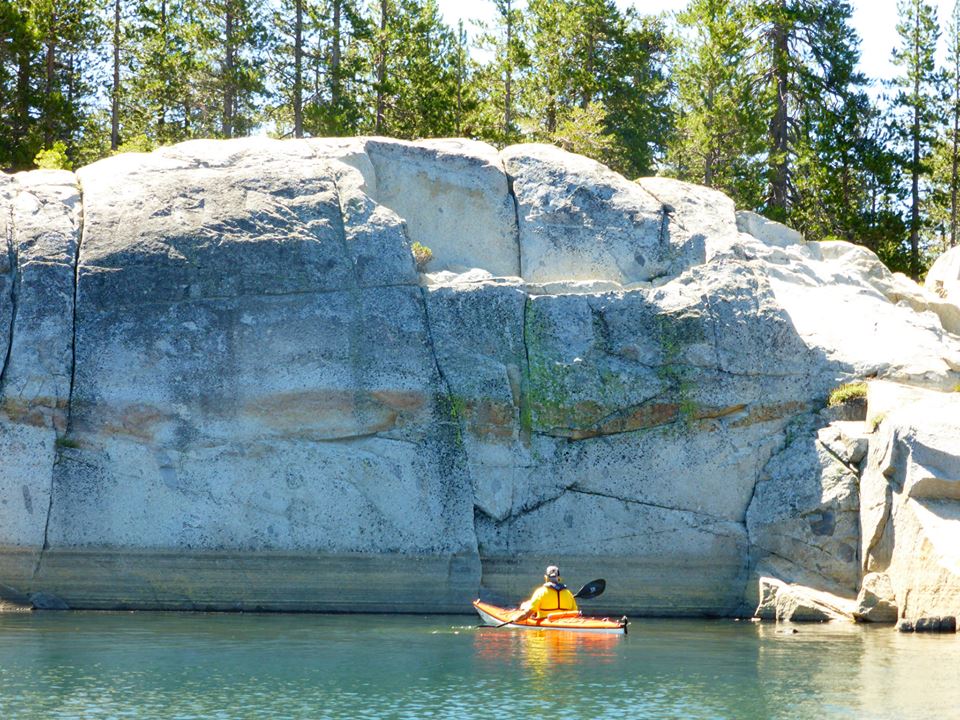
The stunning photographs above were taken by Cheryl Wood .
Known for stylized depictions of landscapes and people, Cheryl is a proven master of capturing unique moments of outdoor enthusiasts in wilderness settings, and she has created a beautiful portfolio of images available for stock photography.
For graphic services, photography assignments and stock photography inquiries, please contact moongirl@earthlink.net
© copyright 2013 Janice L Green PaddlingCalifornia.com, Articles and photos are copyright protected and may not be copied, displayed, reproduced or published in any other form without the express written permission. Material supplied by others is the copyrighted property of the respective photographers.
For photograph usage or broken links contact: paddleme2@sbcglobal.net